Does the soil reach your gut?
The carrot is not what it claims to be.
Dinner parties produce the same exchange every time. Someone claims vegetables have lost half their minerals since the war, everyone nods, and no one at the table knows the number.
The number matters if it stands up to measurement. Trace it back and you see whether the chain from soil to plate to gut holds together.
Last week’s Field Note made the case that soil and gut follow the same rule. You do not add life to either; you feed the residents already there. That rule holds. This is about the thing it deliberately left alone: whether the soil your food grew in actually affects the outcomes in your gut.
There are three handovers: soil to plant, plant to plate, and plate to you. One connection is more fragile than most assume; another is more resilient than commonly thought. Recognising these differences helps you know where to concentrate your attention.
The link everyone talks about
Start with minerals, because that is the claim in circulation.
The headline comes from the data. Food composition tables show mineral content in fruit and vegetables dropping between 10 and 52 percent in the United Kingdom from 1940 to 2019. American figures follow the same pattern. Stop at this point and the conclusion is simple: empty soil, empty food, empty gut.
But the comparison is not clean. The numbers come from different people, using different methods, on different varieties, across different decades and places. This is a historical trend, not a controlled experiment.
So somebody ran the experiment. In 2011 a team publishing in Crop Science took fourteen broccoli cultivars released across fifty years and grew them side by side, in the same two field trials, in the same soil, in the same season. Same ground, same weather, same everything except the genetics.
If the soil had emptied, the old cultivars should have looked like the new ones, because all fourteen were pulling from the same dirt. If the varieties had changed, the old ones should have come out ahead.
The older cultivars performed slightly better, but then the difference vanished. For most minerals, there was no clear link between concentration and release year, and after 1975, no meaningful change appears at all.
What did change was head mass. Bigger heads meant lower mineral concentration, reliably.
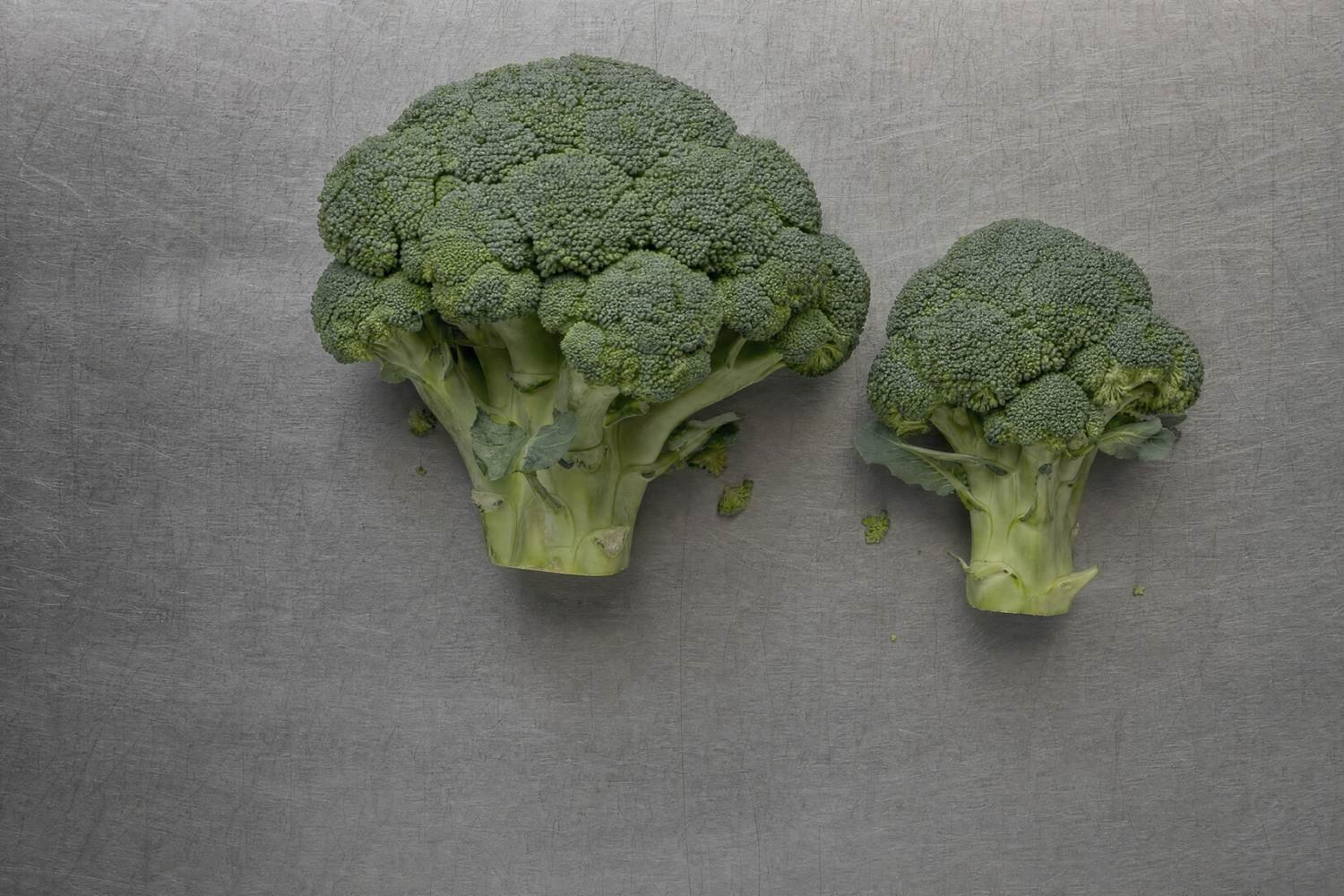
This is the dilution effect. It is a breeding story, not a soil story. Over sixty years, selecting for yield delivered bigger plants with more carbohydrate and water per unit of mineral. The measurement per hundred grams falls, but per plant, it does not.
The vegetable did not get poorer. It got bigger. The measurement stayed per hundred grams.
Why this is not settled either
A 2014 review in HortScience makes the point that keeps the question open. Those historical trends have been checked against side-by-side cultivar comparisons in very few cases, so they warrant further evaluation rather than confident repetition. That cuts both ways, and it cuts against the tidy version of this argument as much as the alarming one.
Then there is the detail that should end anyone’s confidence in the percentages. A 2024 review in Foods reports copper declines of between 34 and 81 percent, then notes that copper across vegetable samples has a natural range of about 1,555 percent.
The ordinary difference between two vegetables is about twenty times larger than the reported historical decline.
The decline is not fake. It is small next to normal variation. Where a vegetable was grown, when it was picked, and how long it spent in transit shift the number more than eighty years of agriculture.
Soil practice still matters. Soil quality is real and worth defending, and it returns below in a form that carries more weight.
What it says is narrower. The specific claim, that depleted soil is why vegetables are less nutritious, is the weakest link in the chain, and it is carrying more freight in the culture than the evidence supports.
The link nobody talks about
The mineral story weakens under scrutiny. The microbial story, by contrast, gets stronger. Not the minerals inside the plant, but the bacteria on its surface.
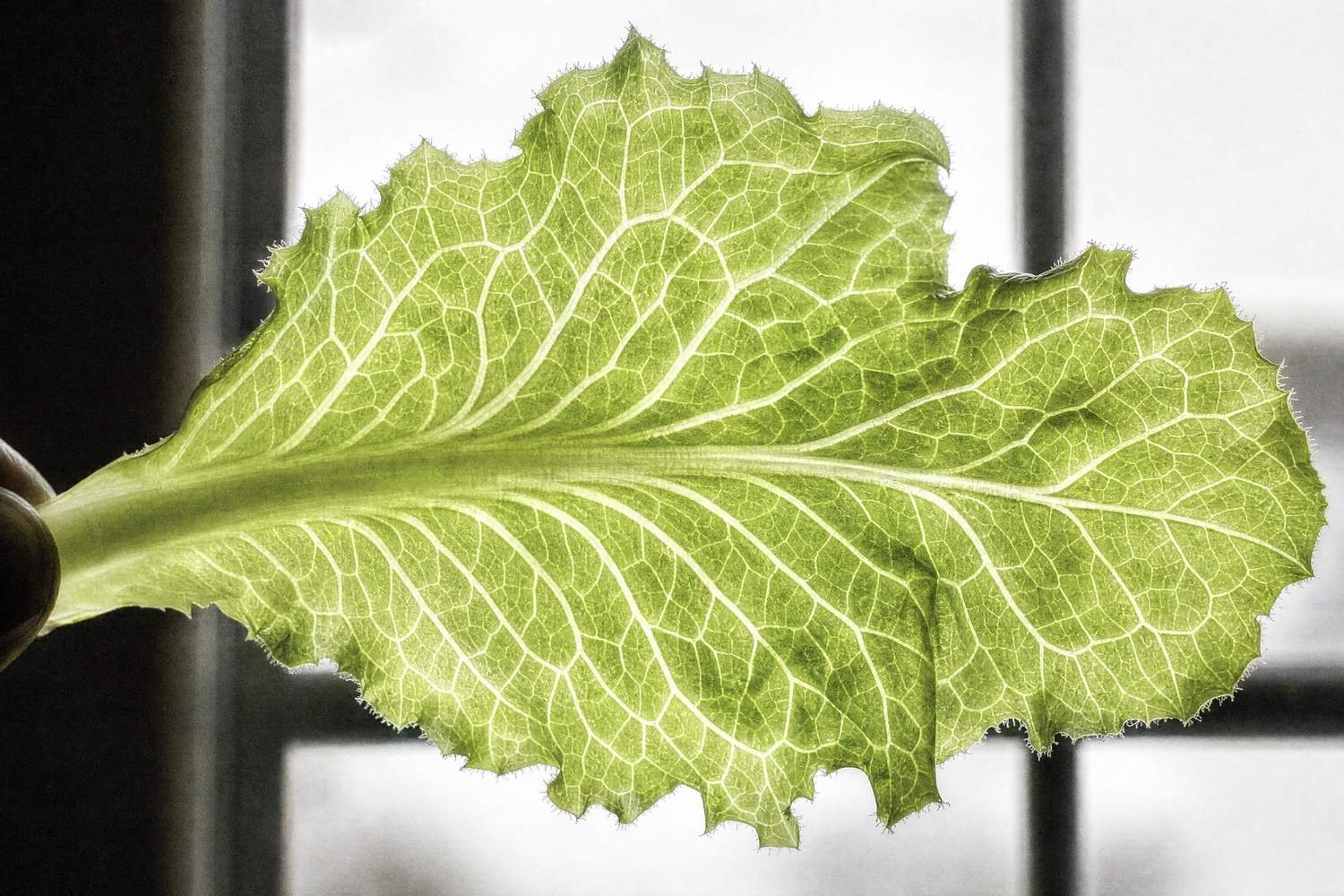
Work posted in early 2026 sequenced the surface community of 143 lettuces across a full twelve months, then compared what it found against gut microbiome datasets covering 3,254 people for bacteria and 2,831 for fungi. Lettuce-associated bacteria turned up in human guts, widely, and more often than the fungi did.
The pattern is more interesting than the headline. The taxa appearing most were the season-specific ones rather than those present all year. And the lettuce bacteria that showed up in guts tended to sit alongside resident bacteria that break down non-plant glycans, in a pattern that correlated with higher overall gut diversity.
Season and soil shape what lives on the leaf. What lives on the leaf turns up in the person who eats it. That is a chain with something running through it.
That work is a preprint. It has not been through peer review. It is a large and careful dataset pointing somewhere real, but it is one study of one crop, and detecting a bacterium is not the same as showing it took up residence.
This is a mechanism, not a promise.
The direction looks plausible. A seventeen-week human trial published in Cell in 2021 found that a fermented food diet raised gut diversity. The new diversity did not match the microbes in the food itself. The residents shifted. Something arriving on the food changed the community without becoming the community.
Same shape as the lettuce finding. Arrivals matter, not because they move in, but because they change what the residents do.
This is also where soil practice re-enters with more force than the mineral argument gave it. Field evidence, some of it in last week’s references, shows regenerative practice raising soil bacterial diversity, with the effect compounding across years of doing it. If the surface community is the link that carries, then how ground is farmed matters through the microbes rather than through the mineral table.
What this means in practice
The takeaway is not what the depleted soil story would suggest.
Do not pay for provenance that cannot be verified. If mineral content per hundred grams shifts less across eighty years than it does between two vegetables in the same crate, a premium for a mineral claim no one can check is not money well spent. Buy well where it is easy. Do not build a system on it.
Focus instead on surface and freshness. If the microbial link is what counts, the plant needs its surface community intact. Less scrubbing, less time in transit, raw or lightly handled some of the time. This advice survives uncertainty: a shorter supply chain and gentler wash cost nothing and risk nothing if the microbial link proves less important than it appears.
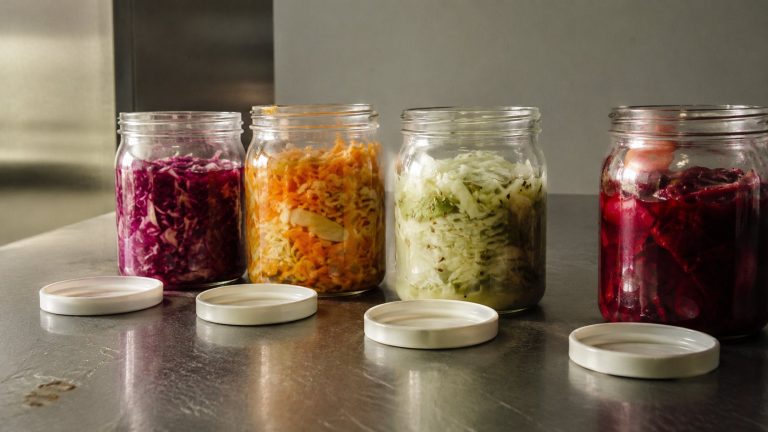
Then feed the residents, which is the controllable part. This is where fermentation earns its place, justified by last week’s Cell trial, not this week’s lettuce preprint. A two percent salt ferment does not install a new population. It delivers a large, varied dose of plant substrate and bacterial metabolites to the community already present.
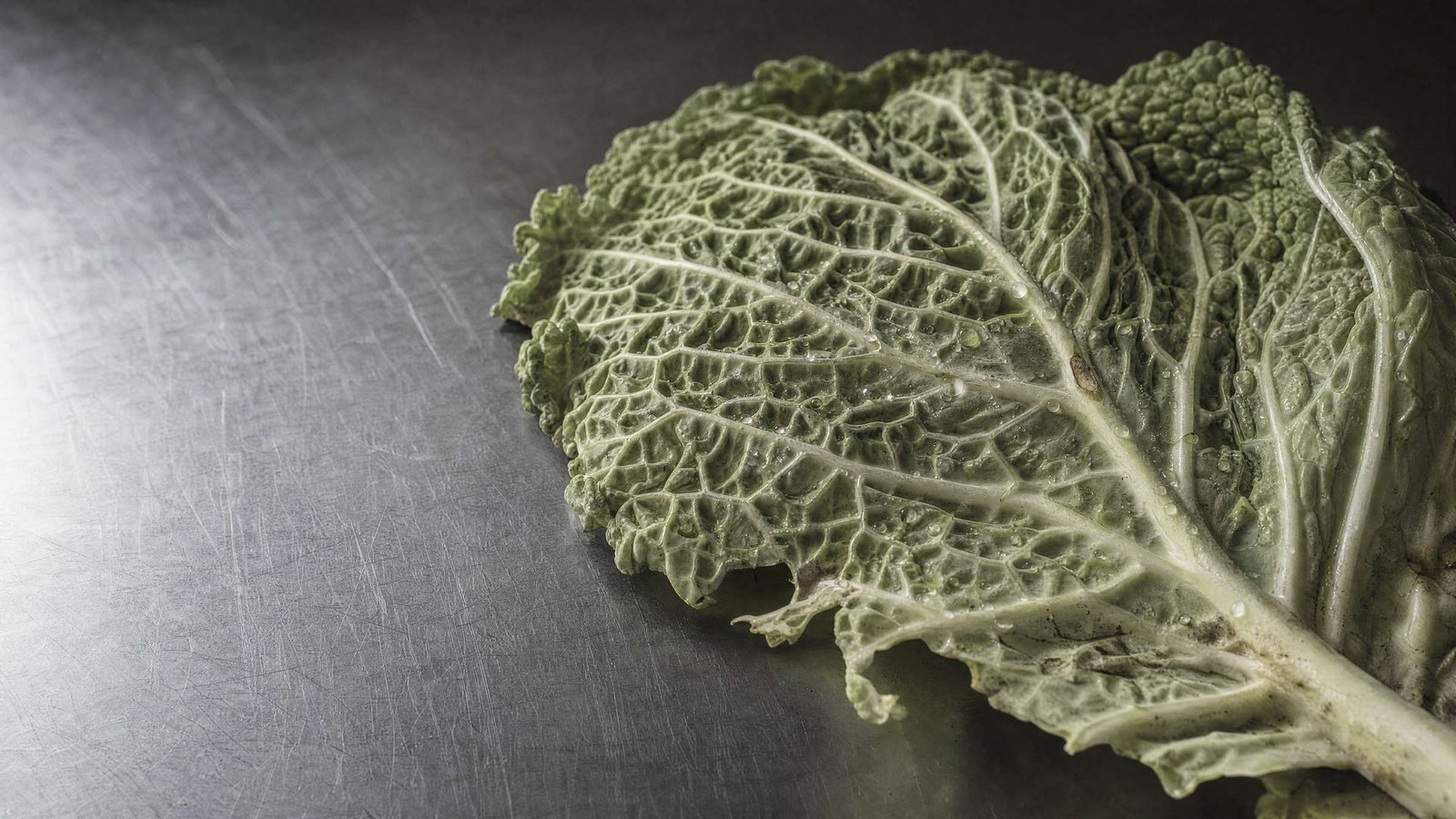
This week: pick a cabbage, weigh it, add salt at two percent of total weight, and bag it. A kilogram of cabbage needs twenty grams of salt. In the chamber vac, it is ready in days, not weeks.
Soil is out of your control. Variety, mostly out as well. Transit time can be influenced. What happens in the kitchen is yours to direct.
One chain, three links
So, does the soil reach your gut?
Through minerals, less than the dinner party version claims, and mostly through plant breeding rather than emptied ground. Through microbes, more than expected, on evidence that is early and not yet peer reviewed.
The rule from last week’s Field Note stands. Nothing is added to the system. Feeding is what happens, and the closer the food gets to your kitchen, the more control you have.
Next week: the input itself. Feeding the residents is the rule, but feed them what, and how much variety does a community actually need before it shifts.
References
Farnham, M. W., Keinath, A. P., and Grusak, M. A. (2011). Mineral Concentration of Broccoli Florets in Relation to Year of Cultivar Release. Crop Science, 51(6), 2721-2727. https://doi.org/10.2135/cropsci2010.09.0556
Simon, P. W. (2014). Progress Toward Increasing Intake of Dietary Nutrients from Vegetables and Fruits: The Case for a Greater Role for the Horticultural Sciences. HortScience, 49(2), 112-115. https://doi.org/10.21273/hortsci.49.2.112
Bhardwaj, R., Parashar, A., and Parewa, H. P. (2024). An Alarming Decline in the Nutritional Quality of Foods: The Biggest Challenge for Future Generations’ Health. Foods, 13(6), 877. https://doi.org/10.3390/foods13060877
In, S., Park, J., and Yun, Y. (2026). Seasonal dynamics in lettuce phyllosphere microbiota and potential transmission to the human gut. Preprint, openRxiv, not peer reviewed. https://doi.org/10.64898/2026.03.05.709721
Wastyk, H. C., Fragiadakis, G. K., Perelman, D., et al. (2021). Gut-microbiota-targeted diets modulate human immune status. Cell, 184(16), 4137-4153. https://doi.org/10.1016/j.cell.2021.06.019
Singh, I., Hussain, M., and Manjunath, G. (2023). Regenerative agriculture augments bacterial community structure for a healthier soil and agriculture. Frontiers in Agronomy, 5, 1134514. https://doi.org/10.3389/fagro.2023.1134514
Field Notes Weekly
One Field Note. Every Monday. Mechanism first, no wellness language.