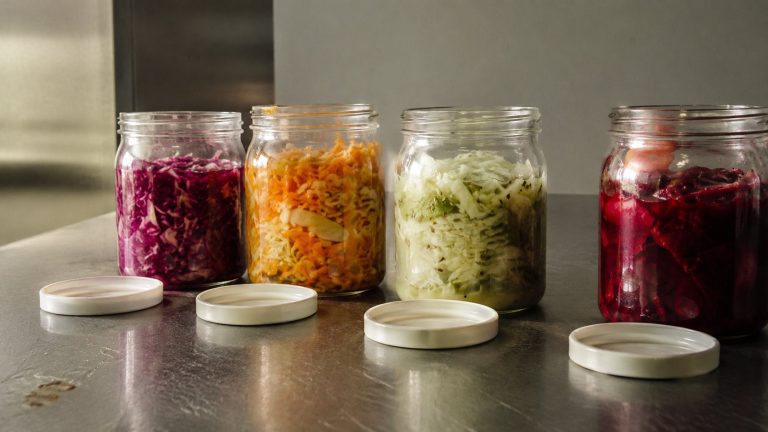
Three words on a jar of kraut

You are standing in front of the chilled shelf with two jars of cabbage and about forty seconds of patience. One says traditionally fermented. One says live cultures. A third, further along, promises something about your gut.
They are not three grades of the same thing. They answer three different questions, and only one of them is a claim about you.
Fermented is a receipt, not a promise
Fermented describes what happened to the cabbage before it reached the jar. Bacteria worked through the sugars in the leaf and left acid behind, which is where the sourness comes from. That work is finished, and the record of it stays in the food whether or not anything is still alive in there.
That is why bread is a fermented food. Nobody expects a loaf to arrive with a live culture in it.
The word is a receipt for labour already done. It tells you the method, and the method is worth knowing, because a fermented cabbage and a cabbage dropped into vinegar taste different and behave differently in a sandwich. Sourness alone will not tell you which one you have.
The ingredient list will get you most of the way. Vinegar high on the list, no mention of fermentation, short production time: that is an acidified vegetable, and it is a perfectly good thing to eat. It is just not the same object.
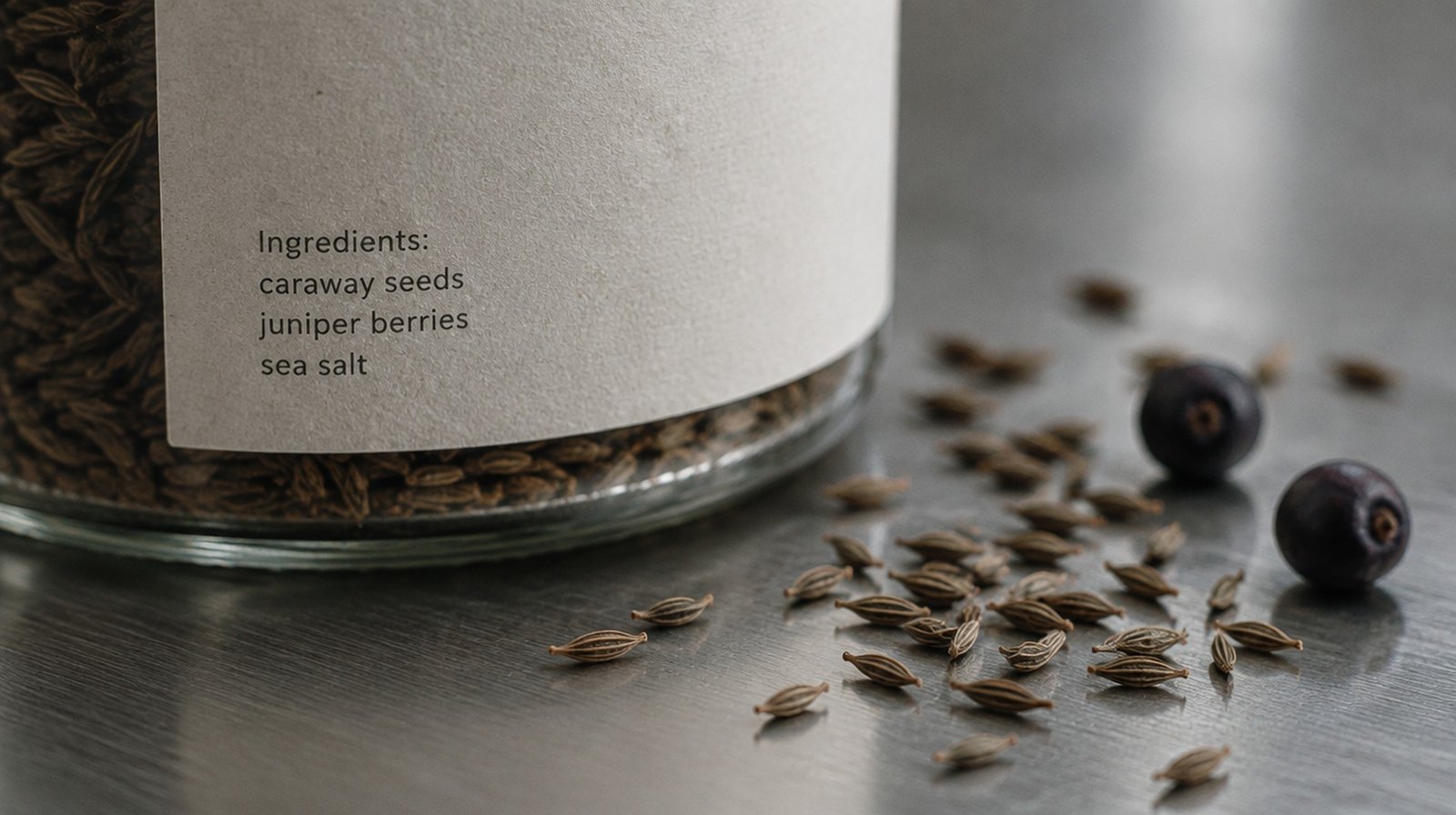
Do not turn the ingredient list into a competition for the fewest words. Caraway and juniper are in there because a cook put them there, which is the most interesting information on the jar.
Live is a headcount, probiotic is a claim
Live is about what is in the jar at the moment you open it. Probiotic is a different order of statement: named organisms, in a known quantity, with evidence behind a specific benefit.
Maria Marco and the ISAPP panel drew that line in their 2021 consensus statement in Nature Reviews Gastroenterology and Hepatology, and they went further than a definition. They told manufacturers which words they are entitled to use.
A product should say live and active cultures only if it has not been processed in a way that removes or kills the fermentation organisms, and if those organisms are present at the level you would expect for that kind of food. A pasteurised ferment with nothing living left in it can fairly be called a food made by fermentation. It cannot fairly be called live.
The panel’s reason is worth quoting plainly. Most fermented foods carry an undefined mix of microbes at variable levels, and nobody has shown what that particular mix does in a person. An unitemised receipt is not a prescription.
So a live claim is useful. It tells you something is in there. It does not tell you that the jar will lift your mood, settle your stomach, or reproduce a result you read about, and any label that jumps from the first to the second has skipped the step where evidence goes.
Turn both jars around
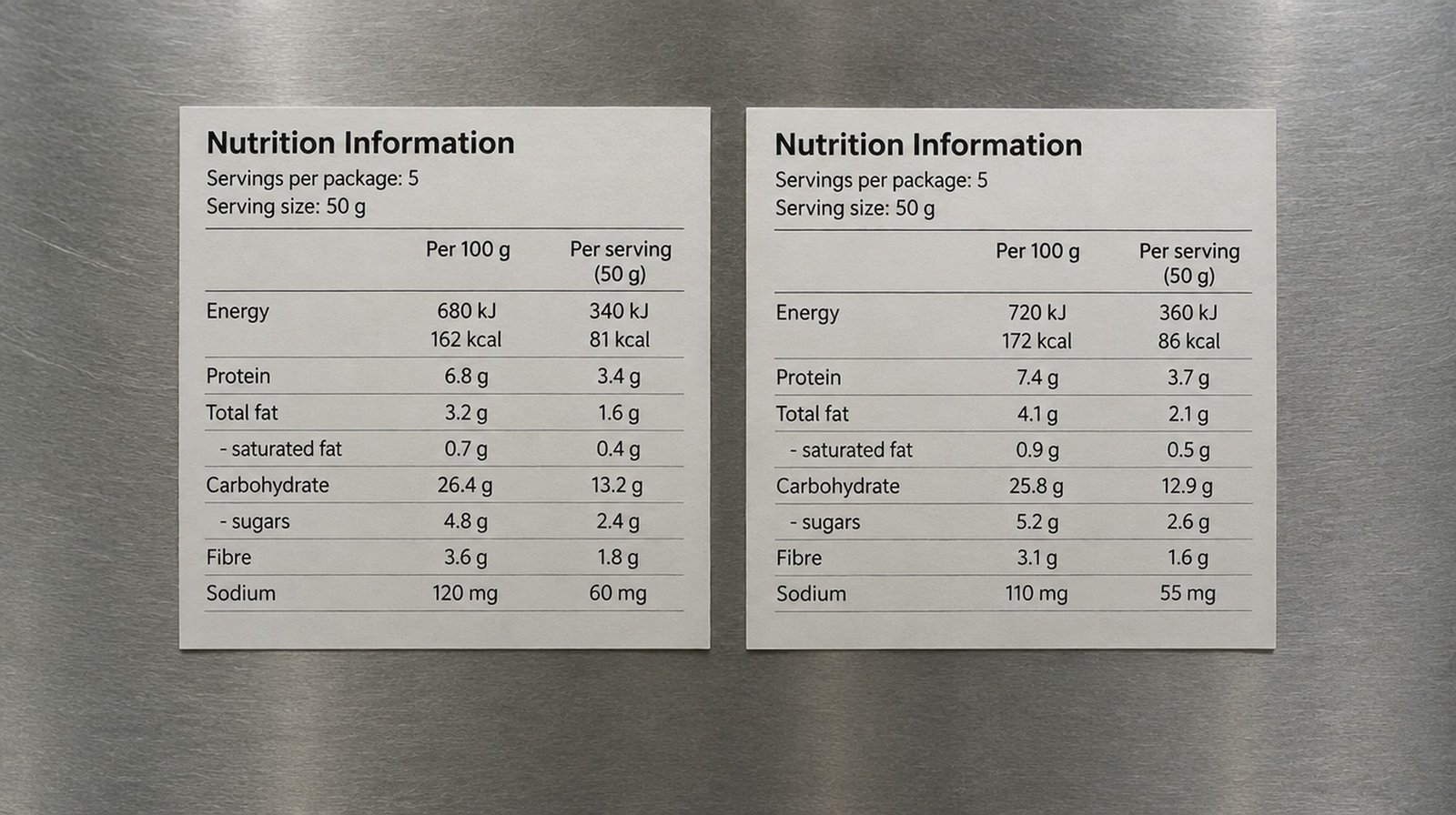
The front is marketing. The back is the receipt, and Australian panels are built so you can read two of them against each other.
Compare the per 100 gram column, never the per serving column. The business sets its own serving size, so one jar’s serving can be half the other’s and the sodium figures stop being comparable. Per 100 grams is the common basis, and it takes four seconds once you know which column you are looking for.
That tells you about the product. It does not tell you your portion. A forkful in a cheese sandwich and a heaped side beside potatoes are two different amounts of the same food, and the meal decides which one you want.
Then read the storage line and whatever it says about after opening, and follow that jar’s instructions rather than a rule you read somewhere. Products differ. The one in your hand is the one whose directions apply.
Pack size deserves the same forty seconds. A big jar is only good value if you like it enough to finish it inside its stated window, which is an argument for buying the small one first.
Give the jar a job before you put it in the trolley
The reason to sort out the three words is not to grade the shelf into virtuous and worthless jars. It is so that you can stop arguing with the label and start deciding what the cabbage is for.
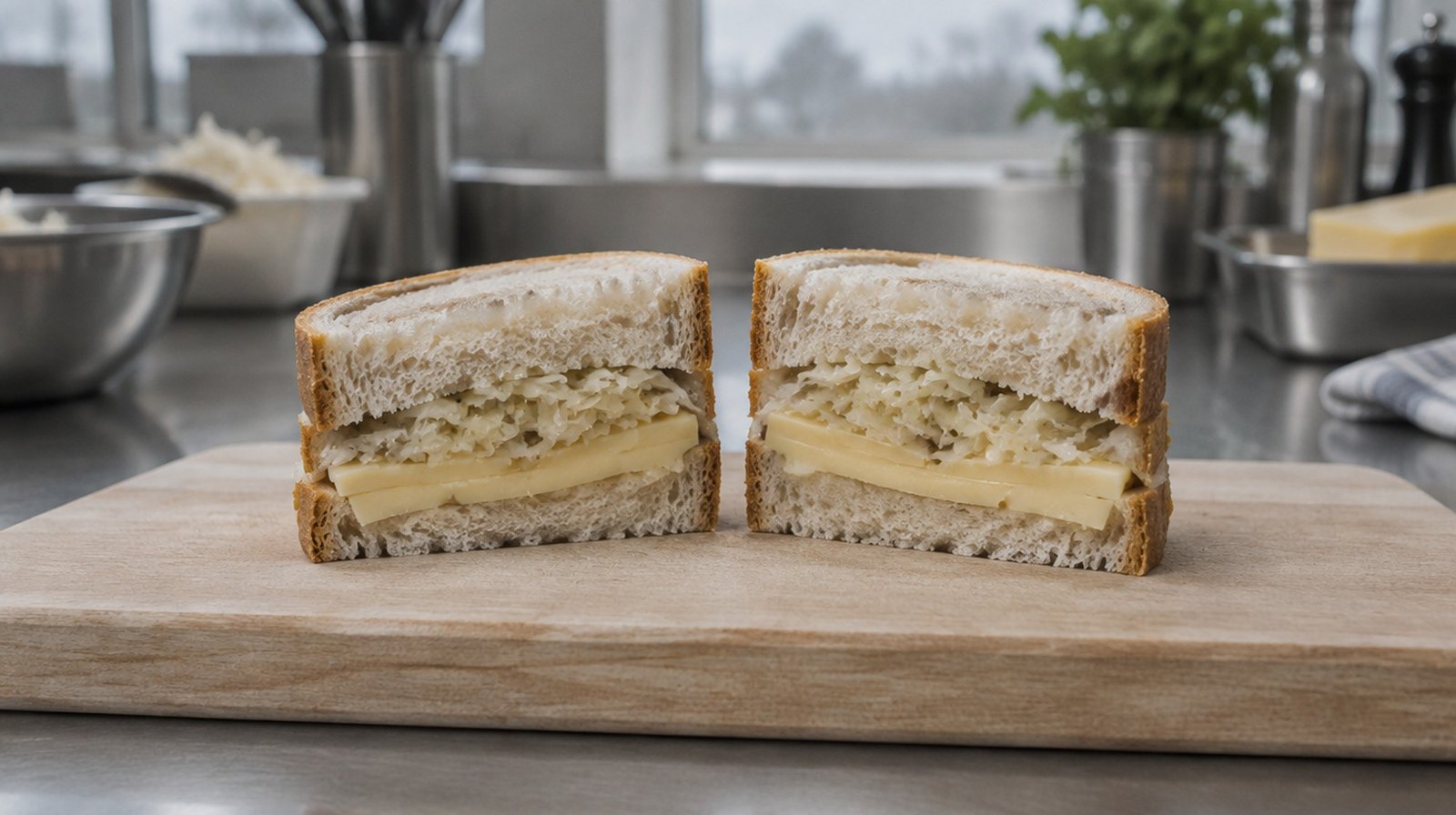
Sharp and crisp in a cheese sandwich, drained so the bread survives. Beside beans or a baked potato, kept on the side at first so you can taste a mouthful with and without. Warmed through in a pan if the dish wants something softer, and if you do that, you have decided the live question for yourself.
That last one is not a loss. A heated ferment has a job at dinner, and it is a job the live jar cannot always do.
Read the receipt. Check whether the live claim is doing work or decoration. Compare the backs. Then pick the jar for the meal you were going to cook anyway.
Next week we look at what happens to the meal after you have eaten it, and why lunch is two meals rather than one.
References
One consensus statement and two FSANZ guidance pages, with what each one covers
Marco ML, Sanders ME, Gänzle MG, et al. The International Scientific Association for Probiotics and Prebiotics (ISAPP) consensus statement on fermented foods. Nature Reviews Gastroenterology and Hepatology, 2021;18(3):196 to 208. DOI 10.1038/s41575-020-00390-5. Verified on scite 17 September 2026, open access, CC BY, no editorial notices. Labelling entitlements at “What is the difference between fermented foods and probiotics?” and Table 1.
Food Standards Australia New Zealand. Nutrition information panels. Serving size is set by the business; the per 100 g column is the common basis for comparison.
Food Standards Australia New Zealand. Food safety basics. Follow the packaging storage, use-by and cooking instructions.

Field Notes Weekly
One Field Note. Every Monday. Mechanism first, no wellness language.