The soil and the gut are running the same rule
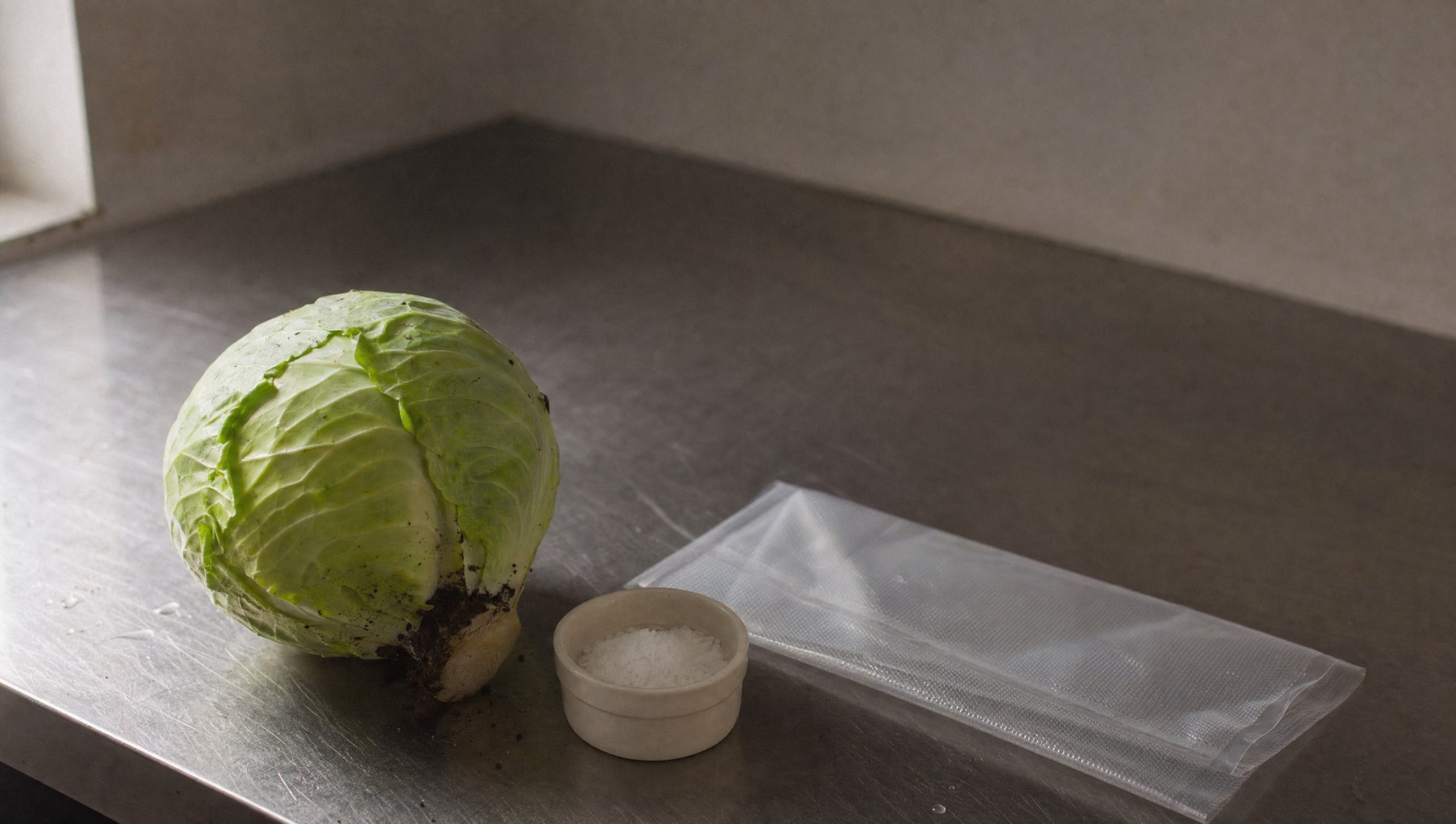
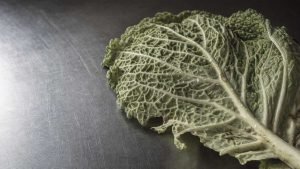
There is a cabbage on the bench, a bowl of salt, and a bag. You are about to ferment it, and if you are like most people you picture what happens next as adding life. You are seeding the vegetable with good bacteria, the way you would pitch yeast into dough.
That is the intuitive model, and it is wrong in a specific and useful way. The bacteria that do the work are already on the cabbage, and already in you. You do not add them. You feed them.
Here is the part that opens something larger. The same is true one step back, in the paddock the cabbage grew in.
Start with the gut
Take the gut first, because it is the half most people have already heard of. When you eat a living ferment, the assumption is that the bacteria in it move in and set up house. Mostly they do not. A systematic review in Frontiers in Nutrition found that microbes arriving with food are transient in most cases, passing through, while the resident community already in your gut is resilient and returns to its own shape soon after.
Then a harder and better finding. A 17-week trial in Cell, run by a Stanford team, put people on a diet heavy in fermented food and watched the diversity of their gut microbes climb. When the researchers traced where that new diversity came from, only a small share of the newly appearing organisms matched anything in the food itself. The residents shifted. The passengers never moved in.
Audit that result before you lean on it. Seventeen weeks, a controlled human diet, stool sampled at both ends. That is what the finding is made of. The mechanism is not colonisation. It is a resident population being fed a steady input and answering.
Which raises the obvious question. If the bacteria you swallow do not stay, can you improve your gut microbiome at all, or are you stuck with the one you have? You can improve it, and this trial is one of the clearer demonstrations that a change of diet does exactly that. Over the seventeen weeks the fermented-food group gained microbial diversity and, at the same time, lowered a panel of inflammatory markers in the blood. That is a real improvement, measured two ways.
The catch is only in what improving means. It does not mean choosing your new residents off a shelf and swallowing them. It means feeding and shifting the community you already have, which is measurable, and which, if you stop feeding it, drifts back toward where it started. Your gut supplies the biology. The ferment supplies the food. The improvement lasts about as long as you keep the food coming, which is the honest reason to make a ferment a habit rather than a project.
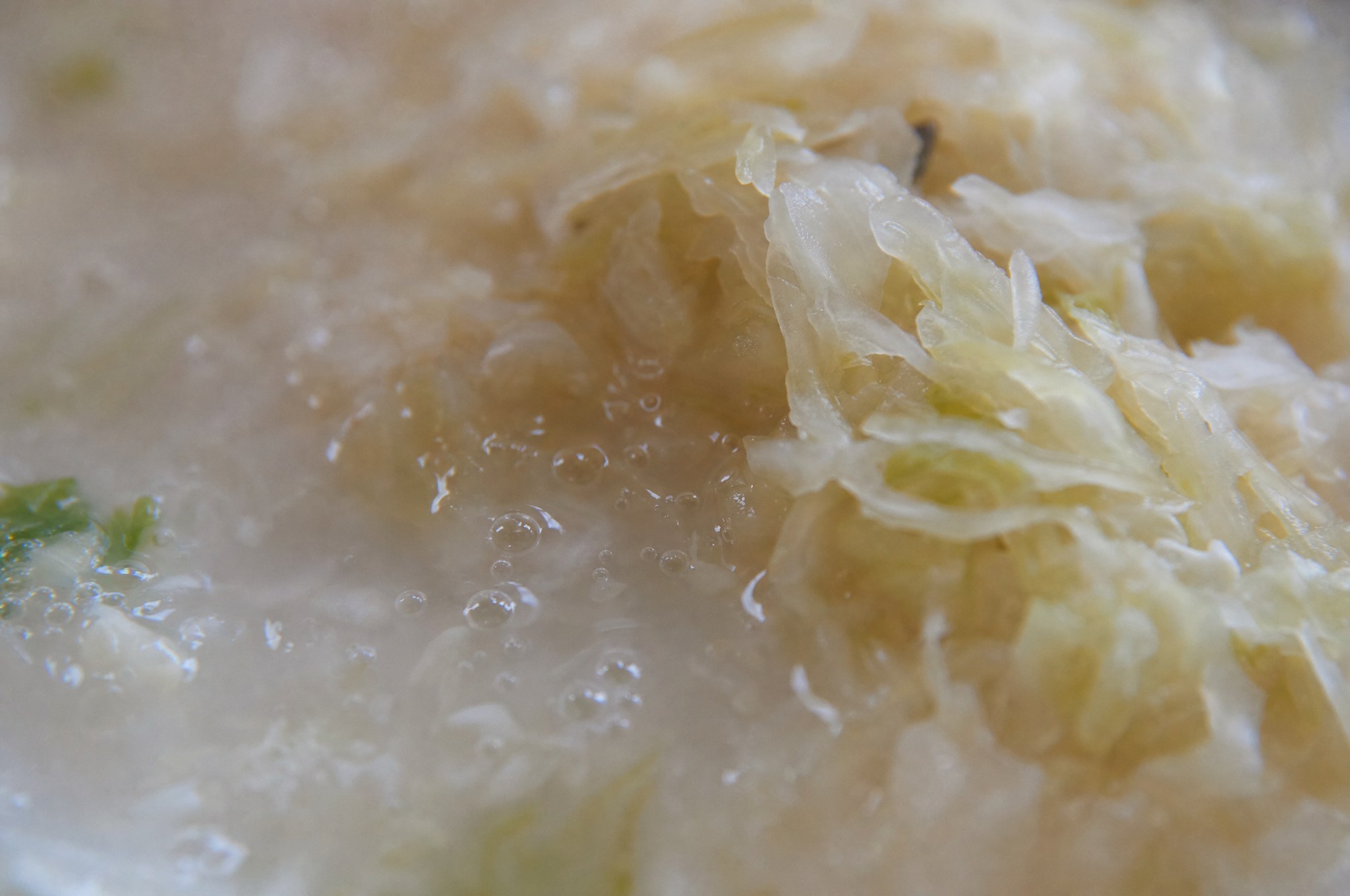
It helps to be concrete about what that food is, because “feed your residents” can otherwise sound like hand-waving. Three things are in the jar. The first is what the bacteria already made: as they fermented the cabbage they produced acids and other compounds, and part-digested the plant matter so more of it is available to you. That chemistry reaches the gut wall whether or not a live cell survives the trip. The second is the live microbes that do survive, which compete with less welcome organisms and are read by the gut’s immune lining as they pass, without ever settling. The third, and the workhorse, is plain plant fibre, which your residents turn into short-chain fatty acids in the colon, butyrate chief among them, and butyrate is the fuel the cells of the gut lining run on and a brake on inflammatory tone. That last part is established gut physiology, not a claim about this jar. Which of the three does the most is still being worked out. The trial is surer of the result than of the route.
And that is before the other reason to eat it, which is that a good ferment tastes like something and needs no further justification than that.
Now step back to the soil
Step back one link, to the ground the vegetable came from. There is a technique in agriculture where you treat depleted soil not by introducing new organisms but by adding material the microbes already living there can eat. You supply the meal. The community already in the ground wakes up, multiplies, and rebuilds the soil’s structure and its nutrient cycling. Field trials across working farms show the bacterial and fungal communities restructuring in response, and the difference holding where the practice runs for years rather than months.
That is all this technique is, and it has a name that comes after the thing rather than before it: biostimulation. Not an inoculant. A meal for the residents. The product is the food. The soil supplies the biology. The recovery is the resident community doing the work.
Two substrates. Two separate bodies of evidence, built by people solving unrelated problems, a nutrition lab and a group of agronomists who have never spoken to each other. The same rule underneath both.
What this is not
One caveat, and it is a real one. This is not “everything is connected.” That sentence belongs to every wellness brand going and it carries no information. The specific version is the one worth keeping. In both places the intuitive picture, that you are adding life, is wrong, and the working picture, that you are feeding a population already in residence, is right.
A second fence, and a sharper one. It is tempting to run the chain all the way through: healthy soil grows better food, better food improves your gut, so eat vegetables from living ground and your inner ecosystem thanks you. The two ends of that chain each stand on their own evidence. The middle does not. Food grown in richer soil producing a measured gut outcome in a person is not something the trials have shown yet, and we are not going to write as though they have. What we have here is a shared mechanism, not a shared health claim. That distinction is the whole point.
What you can do tonight
Here is the usable part, and it costs nothing. If the work is done by residents rather than passengers, then how often beats how much. A spoonful of a living ferment most days does more than a large jar once a fortnight, because you are feeding a population on a schedule rather than trying to install one in a single sitting. Days, and then most days after that.
The kitchen version is short. Cabbage, salt at 2 per cent of the total weight, a bag, the air pulled out, and time. On a 1.2 kilogram cabbage that 2 per cent is 24 grams, about a heaped tablespoon. The salt sets the conditions. The bacteria already on the leaf do the rest. It is the same move a good grower makes on a paddock. Set the conditions, feed what is already there, then get out of the way.
One rule, two ecosystems
So there are two ecosystems in this story, the soil the vegetable grew in and the gut it ends up feeding, and both of them run on the same rule. Neither is improved by adding life to it. Both are improved by feeding the life already there. The people who study soil and the people who study the gut do not tend to make that connection across each other’s work, which is most of the reason it is worth making.
One honest line before you go. This is food, not treatment. A living ferment earns its place on the plate for the flavour alone, and the biology is a quieter bonus that runs on its own clock. If something is genuinely wrong in your gut, that is a conversation with a doctor, not a jar of kraut.
If you want to follow the inner half further, how the gut talks to the rest of you, it is set out at greenholmes.online along with the rest of the Field Notes and the fermentation method itself: https://greenholmes.online/field-notes/gut-brain-axis-vagus-nerve/
Field Notes Weekly
One Field Note. Every Monday. Mechanism first, no wellness language.