What a transit-time test can tell you
You go to the toilet most mornings. It would be easy to assume that yesterday’s dinner has completed its trip. But the number of times you go and the time it takes material from a particular meal to pass through you are two different measurements.
The first is frequency. The second is transit time. One counts visits; the other follows something through the digestive tract.
That distinction can make an otherwise ordinary toilet habit useful to researchers. They want to understand how the movement of food and the microbes living in the gut relate to each other. In one large study, they followed a marker that participants would have little difficulty recognising: blue food colouring in a muffin.
The experiment is worth understanding because it shows both the value of measuring something precisely and the danger of asking that number to explain too much.
A blue muffin, followed by a clock
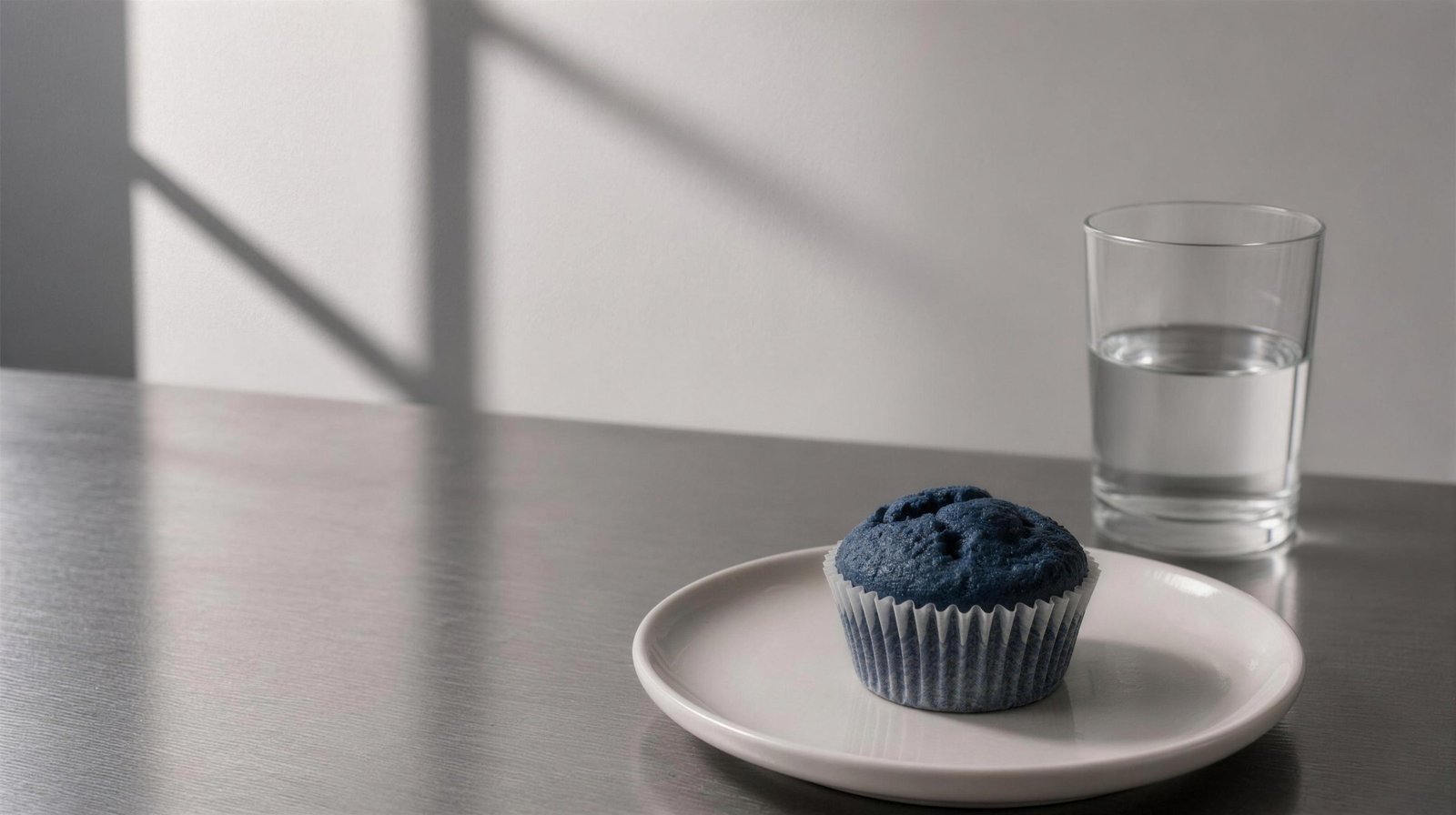
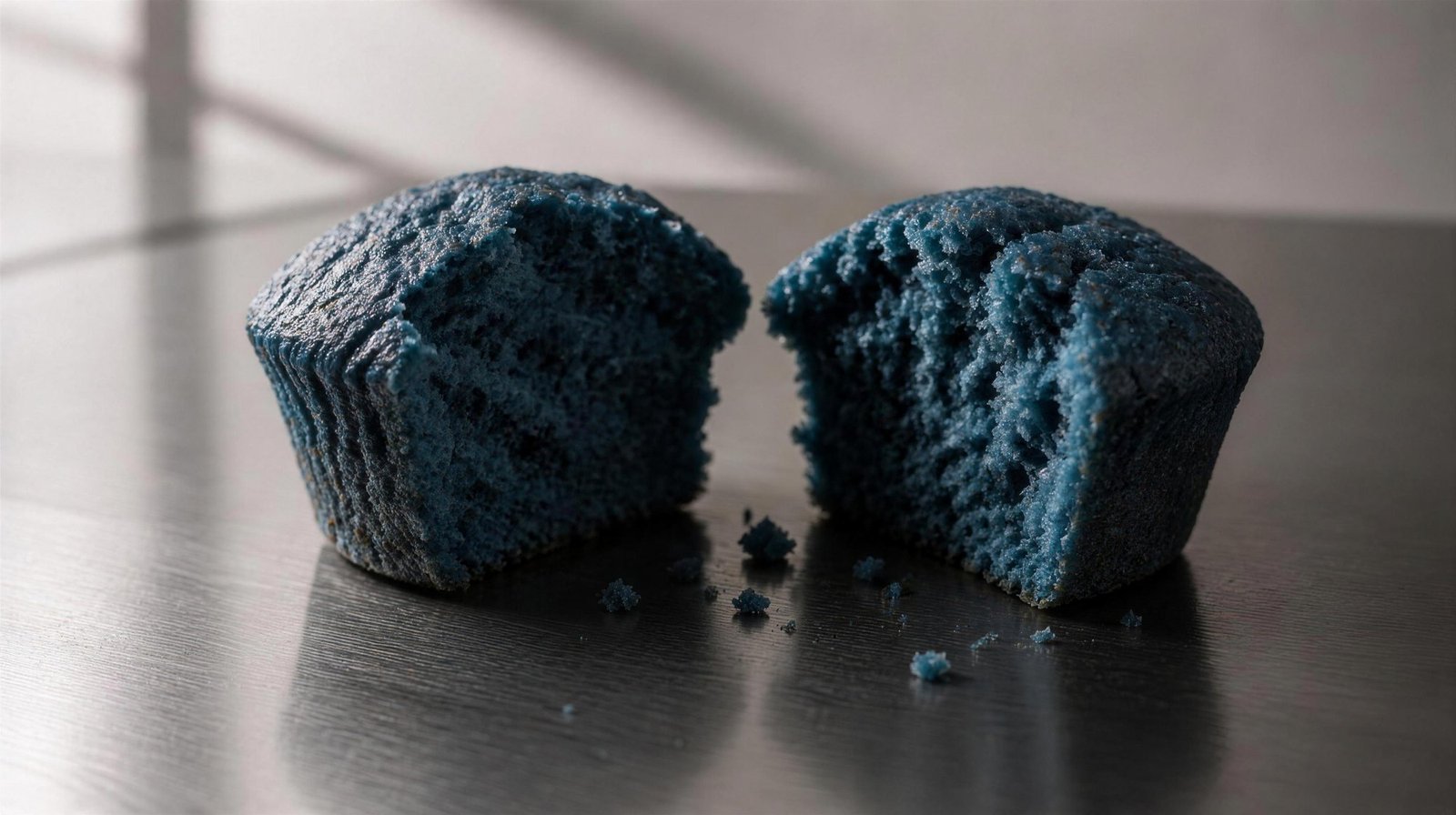
The analysis, published in Gut in 2021, examined transit time and the microbiome in 863 healthy participants from the PREDICT 1 study. At a clinic visit, people ate muffins containing blue colouring. They recorded the first appearance of blue in their stool using an app.
The researchers could then compare elapsed time with the microbes detected in stool samples, usual eating patterns and several measures of metabolic health. The microbiome samples were collected before the first transit measurement. They were not samples of the blue stool itself.
That matters. The colour was a marker for movement, not a dye that identified useful bacteria. It offered a practical way to collect a measurement from many people without requiring repeated clinic visits.
Different methods can measure different parts of digestion. The first visible arrival of a marker does not mean the entire meal has left the body. The useful question is exactly what the method followed.
The microbes and the timing were related
The study found that people in different transit-time groups had different microbiome profiles. Transit time had a stronger relationship with those profiles than the usual proxies of stool consistency and frequency.
There was also a result that complicates a familiar gut-health slogan. Longer transit was associated with greater microbial diversity in this dataset. More diversity and faster movement did not simply rise together.
This does not turn slower digestion into a health target. It means the number of different microbes is not a complete description of how somebody is doing. A microbiome result needs to be interpreted in the context in which it was measured.
The researchers discuss how the time material spends in the gut could affect the resources available to microbes. That is a plausible explanation for some of the pattern, rather than proof that one organism caused a particular symptom in an individual reader. The relationship can be informative without settling every step that produced it.
The analysis did not randomly assign people to faster or slower transit and then measure an improvement in their mood. It did not establish a schedule on which one bowel movement predicts how you will feel three days later. Its contribution is more specific: transit time is important context when studying the microbiome.

Start with a useful description
Away from the research clinic, being able to describe a change is often more useful than attaching a label to it. “My gut is off” could mean harder stools, discomfort, fewer visits, urgency or something else entirely. Those experiences deserve different questions.
The US National Institute of Diabetes and Digestive and Kidney Diseases advises that a clinician may ask about bowel frequency, stool appearance, how long symptoms have been present, eating habits, activity and medicines. A short written record can help you recall those details at an appointment.
A useful note might describe what happened and when, without deciding what caused it. “Harder stools since travelling” gives a starting point. “My microbiome has failed” supplies a conclusion the observation cannot establish.
Constipation can have more than one cause. Changes in routine, food or fluid intake can matter; medicines and health conditions can also be involved.
Persistent symptoms deserve a conversation with a clinician, rather than an ever-growing list of foods to remove. Constipation with blood in the stool, constant abdominal pain, vomiting or inability to pass gas needs prompt medical attention.
The aim of noticing is to make the next conversation clearer. You do not need to turn every meal into a test or grade a good day by the speed of your digestion.
Keep the kitchen question manageable
A broad question such as “What should I eat for my gut?” is difficult to answer from one number. A more practical question is what would make tomorrow’s ordinary meal easier to prepare and more enjoyable to eat.
If lunch is repeatedly assembled at the last moment, choose a meal you already like and make its parts easy to find. A tin of beans, bread, vegetables and something sharp can become several different lunches. The useful decision is which combination you will actually want when work pauses.
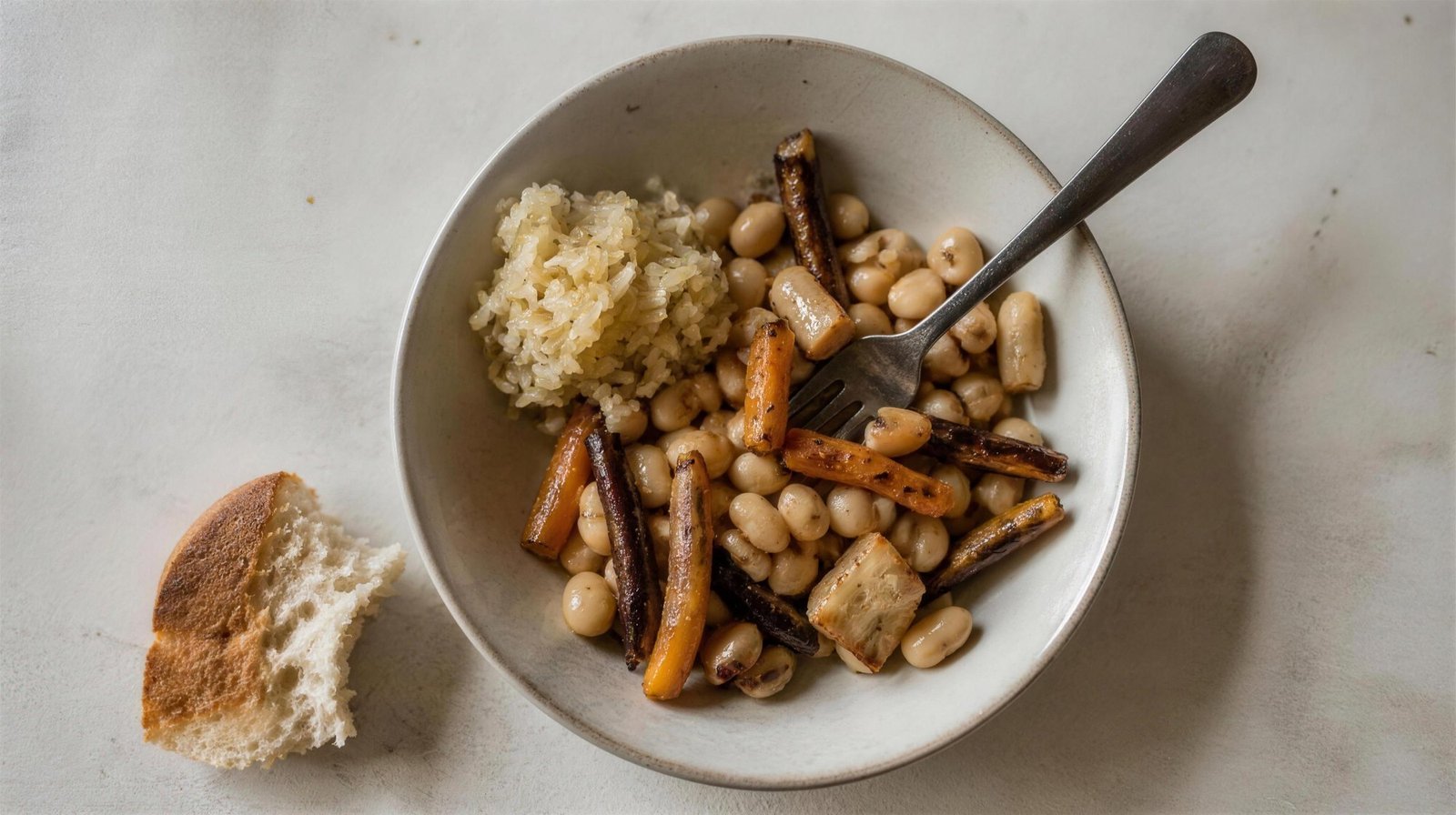
For a bowl of beans and roast vegetables, a spoonful of ready-to-eat kraut can add acidity and crunch. Taste the bowl first, then decide whether it needs either. A ferment has a clear culinary job here; it does not need to carry a promise about next Wednesday’s mood.
Keep the jar according to its label, and keep the experiment small. You are working out how to make a meal you want to repeat, not using a condiment to interpret a medical symptom.
A transit-time test can tell a researcher something specific about movement through the gut. The blue-muffin study shows why that information can help explain differences between microbiome samples.
Your daily routine, symptoms and meals still need their own context. A precise measurement is useful when its meaning stays precise too.
The microbiome half of this piece belongs to the Inner Ecosystem, where a number only means something in the setting it was measured in. If you want the same test run on the most repeated gut and mood claim of all, the serotonin piece is here. And if the kraut earns its place in the bowl, the liquid most people pour away is worth keeping: the brine is a seasoning.
References
One human study and two patient-guidance pages, with what each one covers
Asnicar, F., Leeming, E. R., Dimidi, E., et al. (2021). Blue poo: impact of gut transit time on the gut microbiome using a novel marker. Gut, 70(9), 1665 to 1674. https://doi.org/10.1136/gutjnl-2020-323877. Human, 863 healthy adults from PREDICT 1 with timing data in the four analysed transit classes; microbiome sampled before the first transit measurement; ZOE-related funding and author interests disclosed in the paper. No mood prediction claimed.
National Institute of Diabetes and Digestive and Kidney Diseases. Diagnosis of constipation. Patient guidance, last reviewed May 2018, checked 13 September 2026. https://www.niddk.nih.gov/health-information/digestive-diseases/constipation/diagnosis. The history and symptom-recording section is the source for the written-record paragraph; the technical test descriptions are not reproduced here.
National Institute of Diabetes and Digestive and Kidney Diseases. Symptoms and causes of constipation. Patient guidance, last reviewed May 2018, checked 13 September 2026. https://www.niddk.nih.gov/health-information/digestive-diseases/constipation/symptoms-causes. Source for the causes and the prompt-attention symptoms.
Kitchen examples are original editorial suggestions, not a tested treatment or a new fermentation recipe. No claim that the reader has IBS, a permeability disorder or a particular microbiome condition.

Field Notes Weekly
One Field Note. Every Monday. Mechanism first, no wellness language.