Six servings was a shopping list

Yoghurt, kefir and a jar of kimchi are three separate things you buy for three separate reasons. Put them under one heading and they start to sound like a single treatment with a single dose.
That is what happened to the Stanford trial. It gets quoted as evidence for eating fermented food, in the singular, usually with a spoonful of something pictured beside it. The study was a basket.
What was actually in the trolley
Hannah Wastyk and colleagues published the trial in Cell in 2021. Thirty-six people finished it, eighteen in each of two arms. One arm increased fermented foods, the other increased plant fibre.
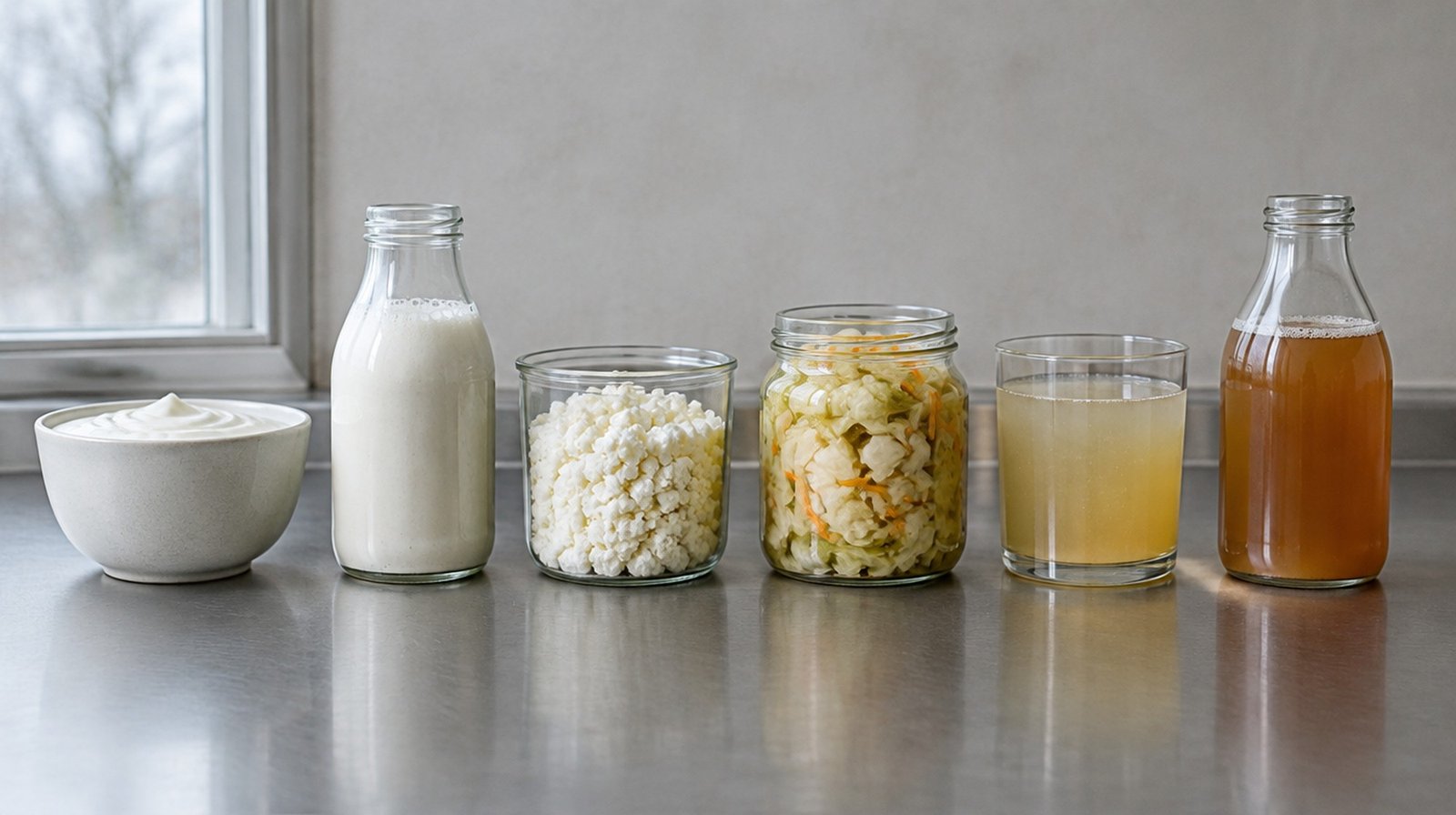
The fermented arm was not given a product. They were given a category, and they filled it themselves from yoghurt, kefir, fermented cottage cheese, fermented vegetables, vegetable brine drinks and kombucha.
Seventeen weeks, and the shape of them matters. Three weeks of baseline measurement, four weeks building intake up, six weeks holding it there, then four weeks where people ate what they liked.
By the end of the holding period the fermented arm averaged about six study-defined servings a day.
Sit with that number for a moment, because it is the number that goes missing. Six servings a day, every day, for six weeks, across six different kinds of food. Not a forkful of kraut beside dinner.
Six forkfuls of kraut would not stand in for it either, and that is the trap the headline sets. It was the variety that was tested as much as the volume.
One result moved, one did not
The fermented arm showed a wider variety of gut microbes and a decrease across a set of inflammatory markers. That is the finding, and it is a real one in humans, which under our evidence rule is the only kind we lead with.
The study’s own primary measure was something else. The Cytokine Response Score, an immune-cell measure run in the laboratory, did not significantly change.
Both of those belong in any honest account. A trial that names its primary outcome in advance and then does not hit it is telling you something, and it is telling you it in the most credible way available: before the result was known.
Thirty-six healthy adults, a large dietary change, and a mix of moved and unmoved measurements. That is what is on the table.
It is also a paper people genuinely argue about, which is worth saying rather than smoothing over. Take it as a well-run study that found something interesting and did not find the thing it set out to measure.
The arm nobody quotes
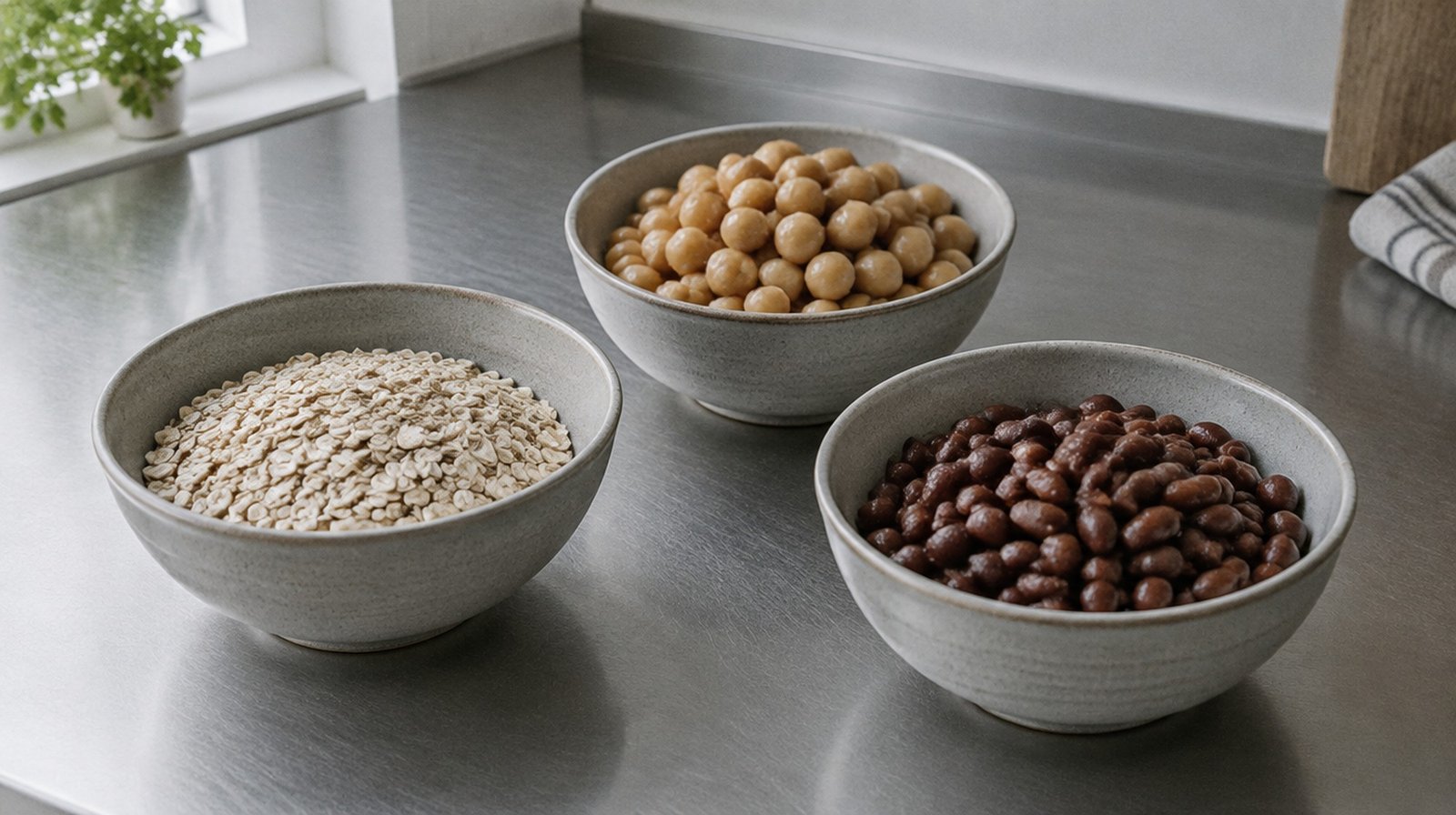
The fibre arm is the half that gets left in the shop.
Its average microbial diversity did not significantly rise over the intervention. What did rise was the number of microbial genes for breaking down plant carbohydrates, which is a different question with a different answer.
Counting how many kinds of microbe are present is not the same as looking at what they are equipped to do with what arrives. One is a headcount, the other is a tool list.
This gets compressed into fibre lost and fermentation won, and that is not what happened. An unchanged diversity score is not a failure, and nothing here is an argument for taking the beans, oats or vegetables off the plate.
Keep the two arms together and the trial says something more useful than either half alone: two substantial dietary changes, two different kinds of effect, measured the same way at the same time.
Three questions, and a way to shop
You do not need to hold the whole methods section to use this. Three questions do most of the work on any food-study headline.
Was the research about this one food, or about a whole eating pattern? Was the quantity anything like what a person would eat? And did the experiment actually measure the thing now being promised?
The Stanford trial fails the first two as a guide to buying one jar, and it answers the third honestly by reporting a null primary outcome. That is a good paper being badly quoted, which is the most common kind.
So shop from your own list rather than theirs. The useful question is which of those six foods belongs in the meals you already make.
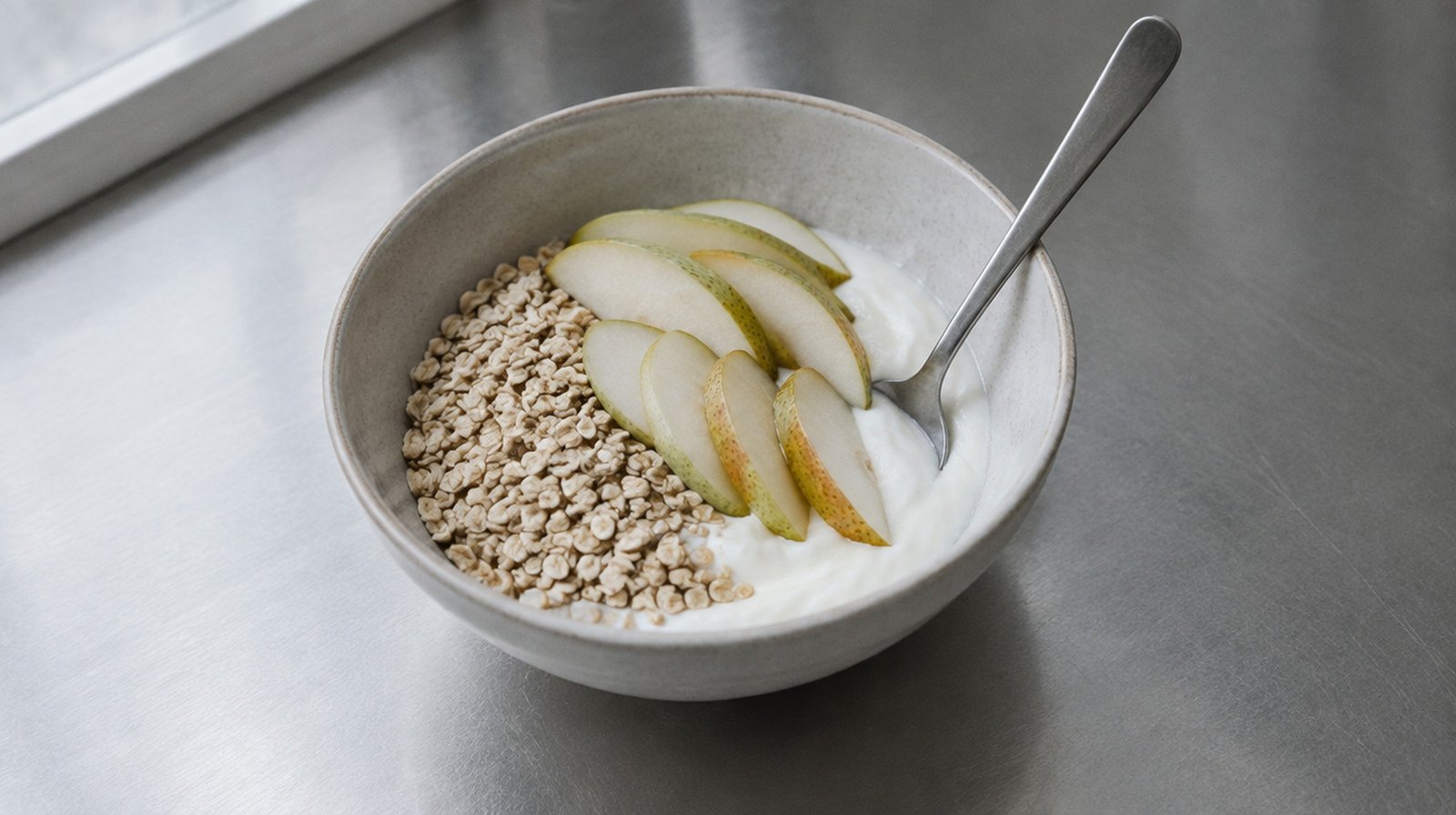
Yoghurt with oats and a sliced pear, where the oats give the spoon something to catch. Chickpeas and cucumber with kimchi kept on the side, so the heat is yours to set per bite. Kraut beside a baked potato and beans, where a mild soft base gives the sharp thing somewhere to sit.
Follow the label on anything ready to eat, and pick for the meal rather than the mechanism. Nobody has to reproduce a trial to cook a good lunch.
Next week: how to turn one of those into a habit that survives a bad Tuesday.
References
3 sources, with what each one covers
Wastyk HC, Fragiadakis GK, Perelman D, et al. Gut-microbiota-targeted diets modulate human immune status. Cell, 2021;184(16):4137 to 4153.e14. DOI 10.1016/j.cell.2021.06.019. Human dietary intervention, 36 completers, 18 per arm, 17 weeks. Verified on scite 17 September 2026, no editorial notices. Note: 29 supporting and 8 contrasting Smart Citations, a contested paper.
Eat for Health, Australian dietary guidelines. Vegetables and legumes, and grain foods, as sources of dietary fibre.
CSIRO. Resistant starch. Mechanism and food context. The meal combinations above are editorial, not tested by CSIRO.

Field Notes Weekly
One Field Note. Every Monday. Mechanism first, no wellness language.