What the ferment leaves behind
You stir a spoon of sauerkraut through a hot pan and somewhere in the back of your head a voice says you have just killed everything that made it worth eating. Most of us have heard that voice. It is worth asking whether it knows what it is talking about.
Here is the strange thing underneath it. Most of what a ferment gives you was never alive in the first place.
The fire and the clay
Think of a ferment as a kiln. Clay goes in soft and comes out something else, and the change does not depend on the fire still burning.
The bacteria in your jar are the fire. The food is the clay.
While a ferment is active, the microbes are remaking the food’s chemistry. Sugars become organic acids, proteins break into smaller pieces, and minerals bound up in plant compounds are freed. That is a change to the food itself, not a service the bacteria perform again each time you eat it.
When the ferment slows and stops, the fire goes out. The change stays: acidity, new flavour compounds, freed minerals, the changed texture. None of that needs a living cell to hold its shape.
The tea that proves it
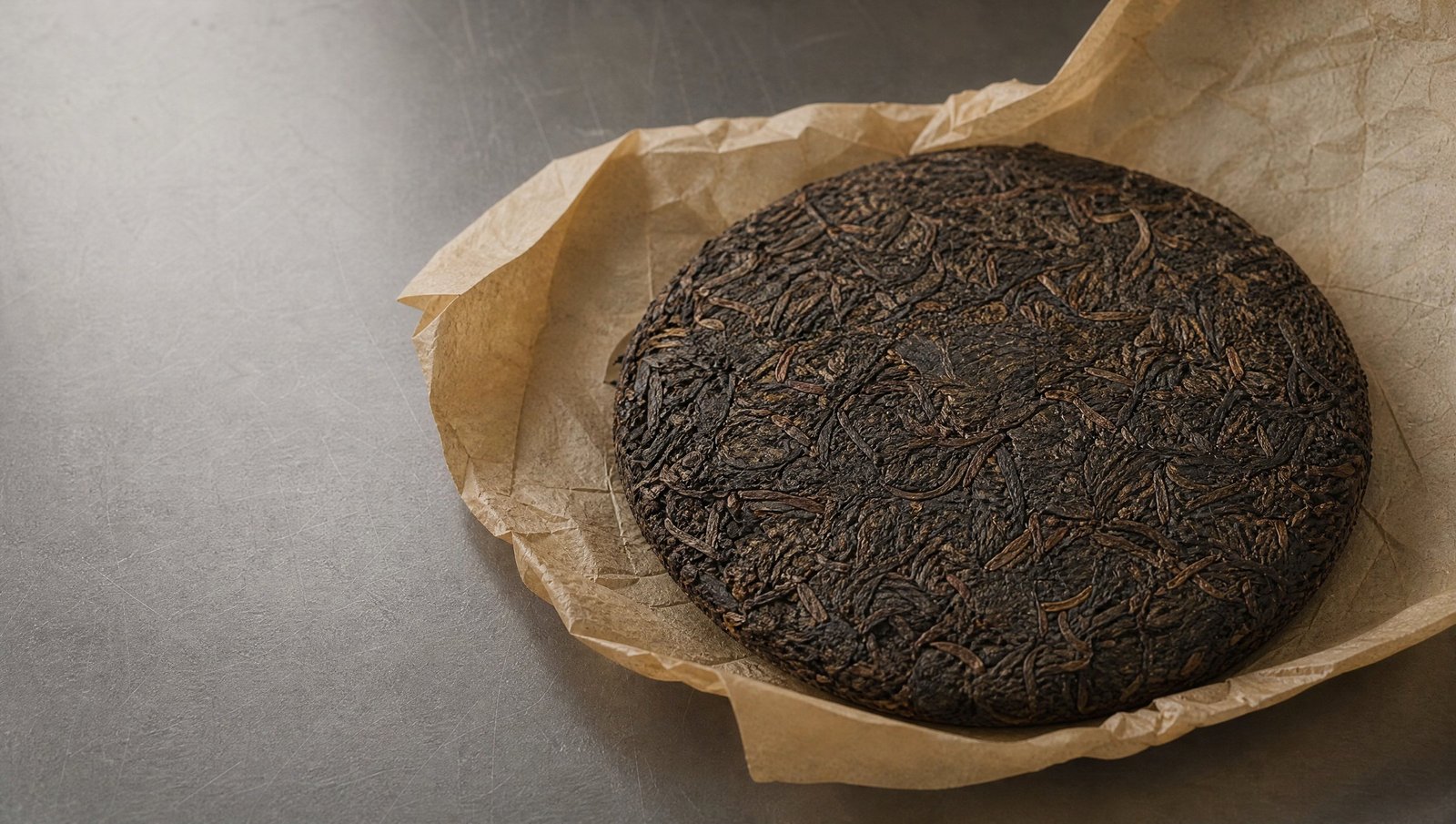
Ripe Pu’er is the cleanest demonstration in the food world. It is tea that is deliberately fermented, piled warm and damp for weeks so that moulds, yeasts and bacteria remake the leaf, then pressed into a dense cake. A survey published in the Journal of Food Safety found dozens of fungal species across production samples, which is the point: the character of the finished tea is microbial.
That cake sits on a shelf, sometimes for years. By the time you brew it, the organisms that made it what it is are long past doing anything for you.
Nobody drinks Pu’er for live cultures. They drink it because the leaf itself was changed, and the change kept.
That is the kiln again. The fire is out. The pot stays fired.
What this means at the stove
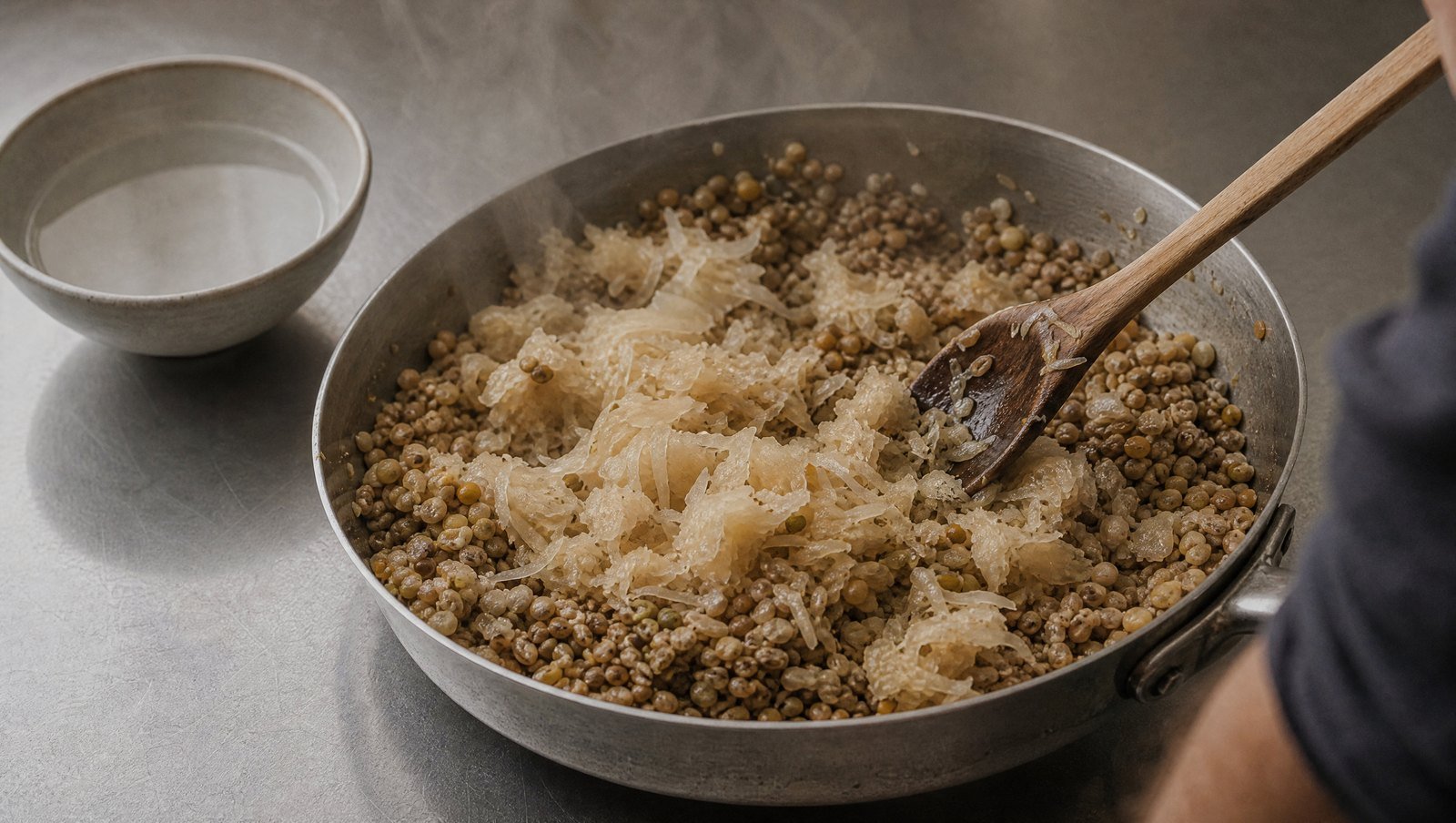
The practical question is what survives your pan, and the answer is most of it.
The organic acids that give a ferment its sourness are not alive and do not die. Heat them and they are still acids, still shaping flavour and still lowering the pH of whatever they land in. The freed minerals stay freed, and the flavour compounds largely hold, though the brightest aromatics soften with long cooking.
What heat does take is the living cultures. If the live organisms are part of why you eat fermented food, a cooked ferment is not delivering them. That is a reason to serve some of it fresh, not a reason to keep it out of the pan.
So run it as three moves rather than one rule.
Cook with it. Kimchi into fried rice, sauerkraut into a braise, a ladle of brine into a pan sauce instead of vinegar. You are cooking with an ingredient that has already been improved, and the acids and freed minerals ride through the heat.
Finish with it. Stir a ferment through at the end, off the heat. You keep more of the aroma and some warmth-tolerant compounds, and the dish still reads as cooked rather than garnished.
Serve it fresh. When the living cultures are what you want, a spoonful on the plate beside the hot food does the job. Same jar, third use.
The brine deserves its own sentence. It carries the acids and a good share of the flavour, and most people tip it down the sink. Treat it as a finished seasoning, somewhere between vinegar and stock.
One jar, working three ways
None of this asks you to choose between cooking well and eating well. The same ferment seasons the pan, finishes the dish and sits fresh on the plate, and each of those is a real use of change already made in the jar.
The kiln does not ask the fire to keep burning, and your dinner does not ask the ferment to still be alive. The change was made in the jar, and it is on the plate either way.
If you want the fuller picture of what a ferment changes inside the food, the iron story is the sharpest example we have written: The iron you eat is not the iron you get.
References
Zhao, Z., Tong, H., Zhou, L., et al. (2010). Fungal colonization of Pu-erh tea in Yunnan. Journal of Food Safety, 30(4), 769 to 784. https://doi.org/10.1111/j.1745-4565.2010.00240.x

Field Notes Weekly
One Field Note. Every Monday. Mechanism first, no wellness language.


2 Comments
Comments are closed.