You eat two lunches

The bowl is empty and you could not describe what was in it. There was an email open, something moving on the screen, and a spoon going back and forth between the two. Lunch happened somewhere in the background.
Three hours later you are hungry, and the obvious explanation is that you did not eat enough. There is a stranger explanation, and a laboratory in Bristol built a machine to test it.
The pump under the table
Ordinarily the amount you eat and the amount you think you ate are the same number. Give someone a bigger bowl and they get more soup and a bigger serving to remember, both at once. That makes the two impossible to tell apart.
Jeffrey Brunstrom and colleagues pulled them apart with a peristaltic pump plumbed into the bottom of a soup bowl. It could quietly add soup or draw it away while somebody ate.
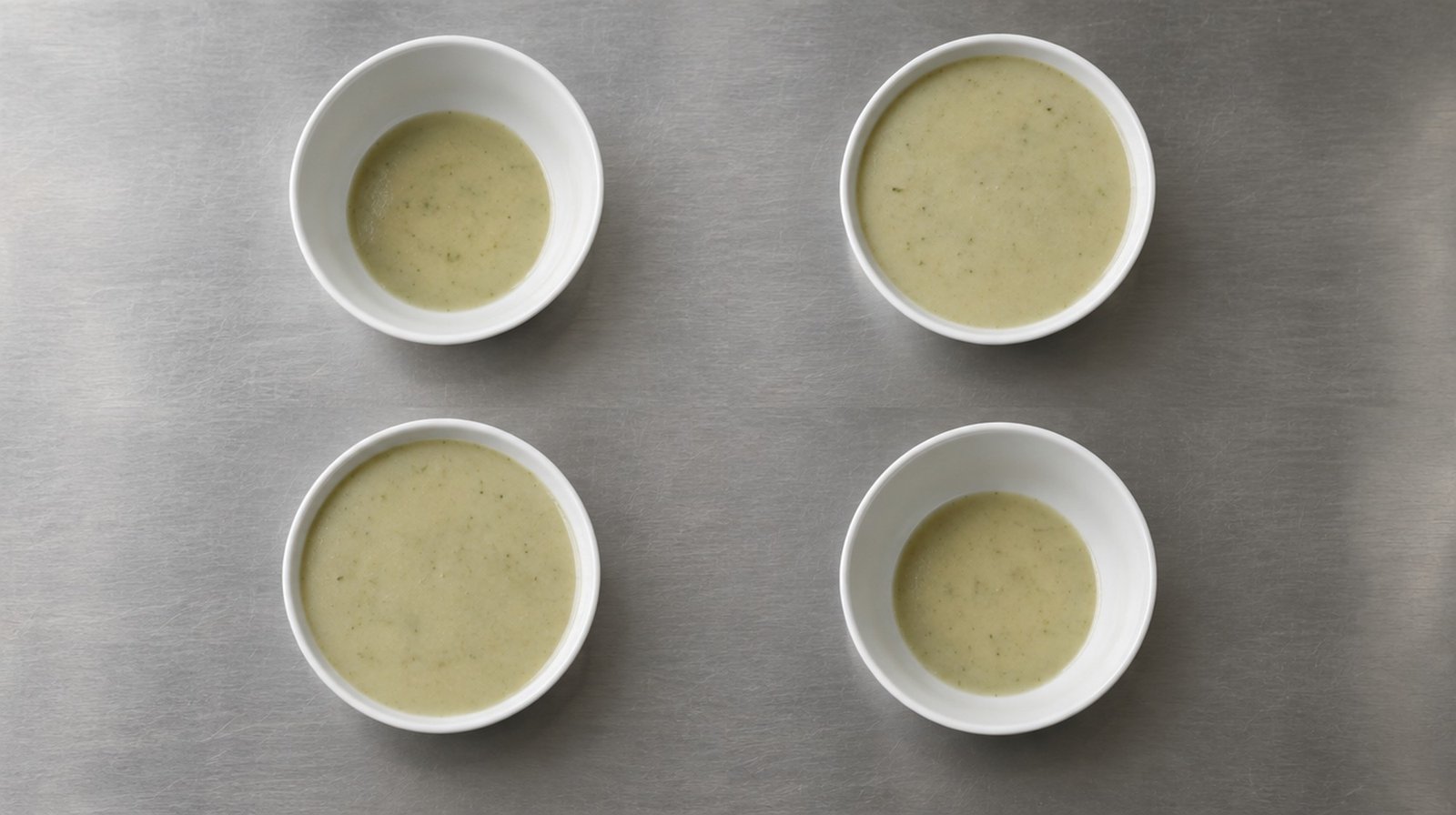
In their 2012 study in PLOS ONE, 100 adults were split into four groups of 25. Each was shown either a 300 or a 500 millilitre portion. Independently of that, each actually consumed either 300 or 500 millilitres.
So a quarter of them watched a small bowl arrive and ate a large lunch. Another quarter did the reverse. The soup was the same soup.
The second lunch talks later
Immediately after eating, hunger tracked the real amount. The people who had actually consumed 500 millilitres were less hungry, which is what a body ought to report.
Two and three hours later the pattern reversed. Hunger was predicted by the portion people had been shown, not the portion they had eaten. Those who believed they had eaten the larger bowl reported significantly less hunger, and a day later they still expected that soup to be more filling.
There are two lunches, then. One goes in the bowl and it runs the first hour. One goes in your memory and it runs the afternoon.
Keep the size of the claim honest. This was one soup, one laboratory, one afternoon, and what it measured was people reporting how hungry they felt. It did not show that picturing a bigger lunch prevents snacking or changes anyone’s weight.
It also separated two words we use as if they were one. Hunger and fullness were asked as different questions, and they did not behave the same way. Next time you catch yourself saying you are full when you mean you have stopped being hungry, that distinction is real and the researchers had to measure them apart.
Distraction, and the thing that did not work
The same group came at it from the other side. In a 2011 study in the American Journal of Clinical Nutrition, 44 people ate an identical lunch at a controlled pace, half of them playing computer solitaire while they did it.
The solitaire group remembered the order of the foods less accurately, reported less fullness afterwards, and ate more biscuits in a later taste test. Several things moved together, so the study cannot tell you that the bad memory caused the biscuits. It is a recognisable scene with a specific result attached.
Here is the part that usually gets left out, and it is the most useful part.
Turning that around does not work. In a 2019 experiment in Appetite, deliberately focusing attention while eating improved how well men remembered the meal’s satisfaction, and it did not reduce later snacking. An eight-week trial published the same year in BMC Public Health gave 107 adults with overweight or obesity an attentive-eating app on top of standard dietary advice, and found no advantage at all: 1.2 kilograms lost against 1.1 in the group with the advice alone.
So the finding is real and the intervention built on it is not. That is a normal distance in nutrition research and it is worth saying out loud, because the internet closed it years ago and sold you an app.
Later hunger is a reason to eat. It is not evidence that you remembered lunch badly.
Something worth tasting
Which leaves attention with a better job than portion control, and it is the one a cook already understands.
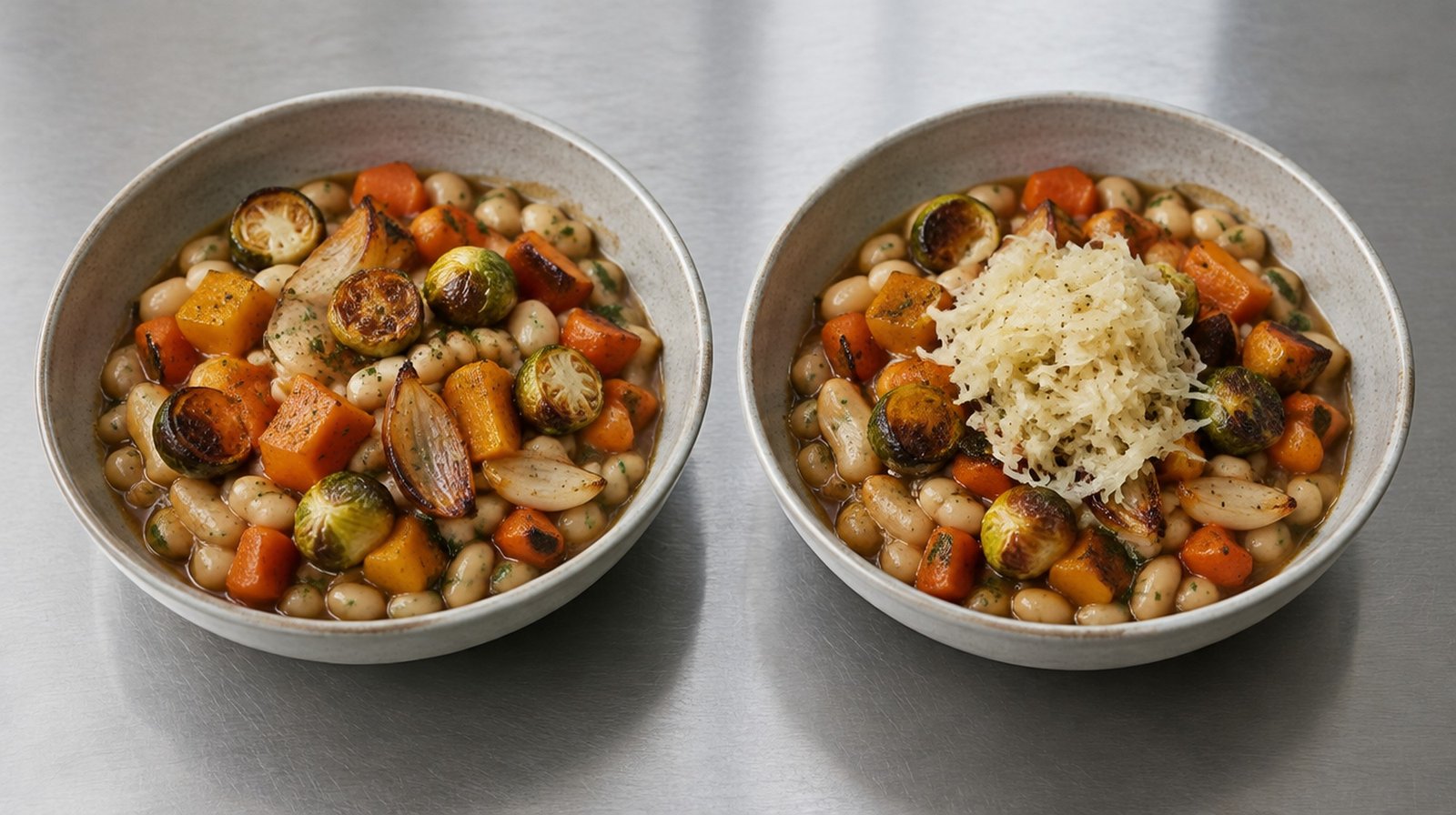
Take a bowl of beans and roast vegetables. Eat one mouthful as it is. The beans are soft, the vegetables are sweet where they caught colour, and now you know what the bowl is actually doing.
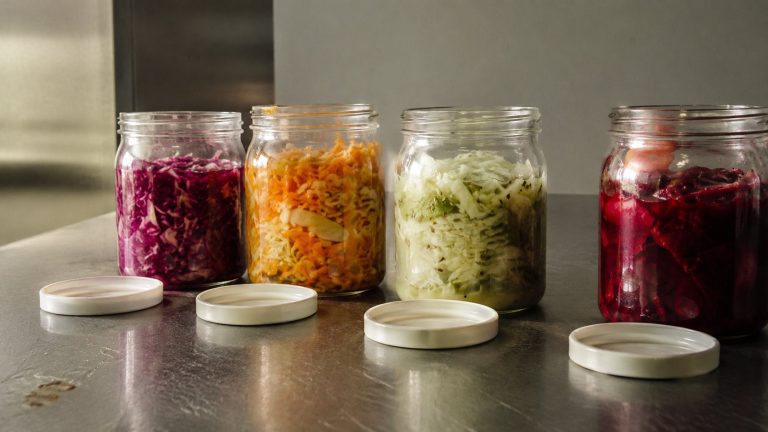
Now take a second with a little drained kraut on the fork. Sharp, cold, some resistance against the soft beans. That is a different dish and you have just found out whether it is a better one.
Half the time the answer is no. The dressing was already sharp enough, or the crunch adds nothing, and the plain version is the one worth keeping. A tasting comparison is as likely to tell you to leave something out.
None of that came from the soup study, and the ferment is not a memory aid. It earns its place on the fork by what it does to the bowl, which is the only claim it needs.
On a bad day there is room for one mouthful of attention and no more. Take it at the start, while the food is still hot and there is something to decide. The empty bowl beside the keyboard has nothing left to tell you.
Next week: what people actually ate in the fermented-food trial everyone quotes, and why six servings a day was a shopping list.
References
4 sources, with what each one covers
Brunstrom JM, Burn JF, Sell NR, et al. Episodic memory and appetite regulation in humans. PLOS ONE, 2012;7(12):e50707. DOI 10.1371/journal.pone.0050707. Human experiment, 100 included in four groups of 25. Verified on scite 17 September 2026, open access CC BY, no editorial notices.
Oldham-Cooper RE, Hardman CA, Nicoll CE, et al. Playing a computer game during lunch affects fullness, memory for lunch, and later snack intake. American Journal of Clinical Nutrition, 2011;93(2):308 to 313. DOI 10.3945/ajcn.110.004580. Human experiment, 44 participants. Verified on scite 17 September 2026, no editorial notices.
Whitelock V, Gaglione A, Davies-Owen J, et al. Focused attention during eating enhanced memory for meal satiety but did not reduce later snack intake in men. Appetite, 2019;136:124 to 129. DOI 10.1016/j.appet.2019.01.021. Human experiment, men only, 34 analysed. Verified on scite 17 September 2026, open access CC BY.
Whitelock V, Kersbergen I, Higgs S, et al. A smartphone based attentive eating intervention for energy intake and weight loss. BMC Public Health, 2019;19(1). DOI 10.1186/s12889-019-6923-x. Randomised controlled trial, open label, 107 adults with overweight or obesity, eight weeks. Verified on scite 17 September 2026, open access CC BY.

Field Notes Weekly
One Field Note. Every Monday. Mechanism first, no wellness language.